
UBUNTU JUSTICE INITIATIVE
THE INDABA PROCESS
We provide tools for youth in custody and mentors them to develop a new way of living after their release.
The Indaba Process
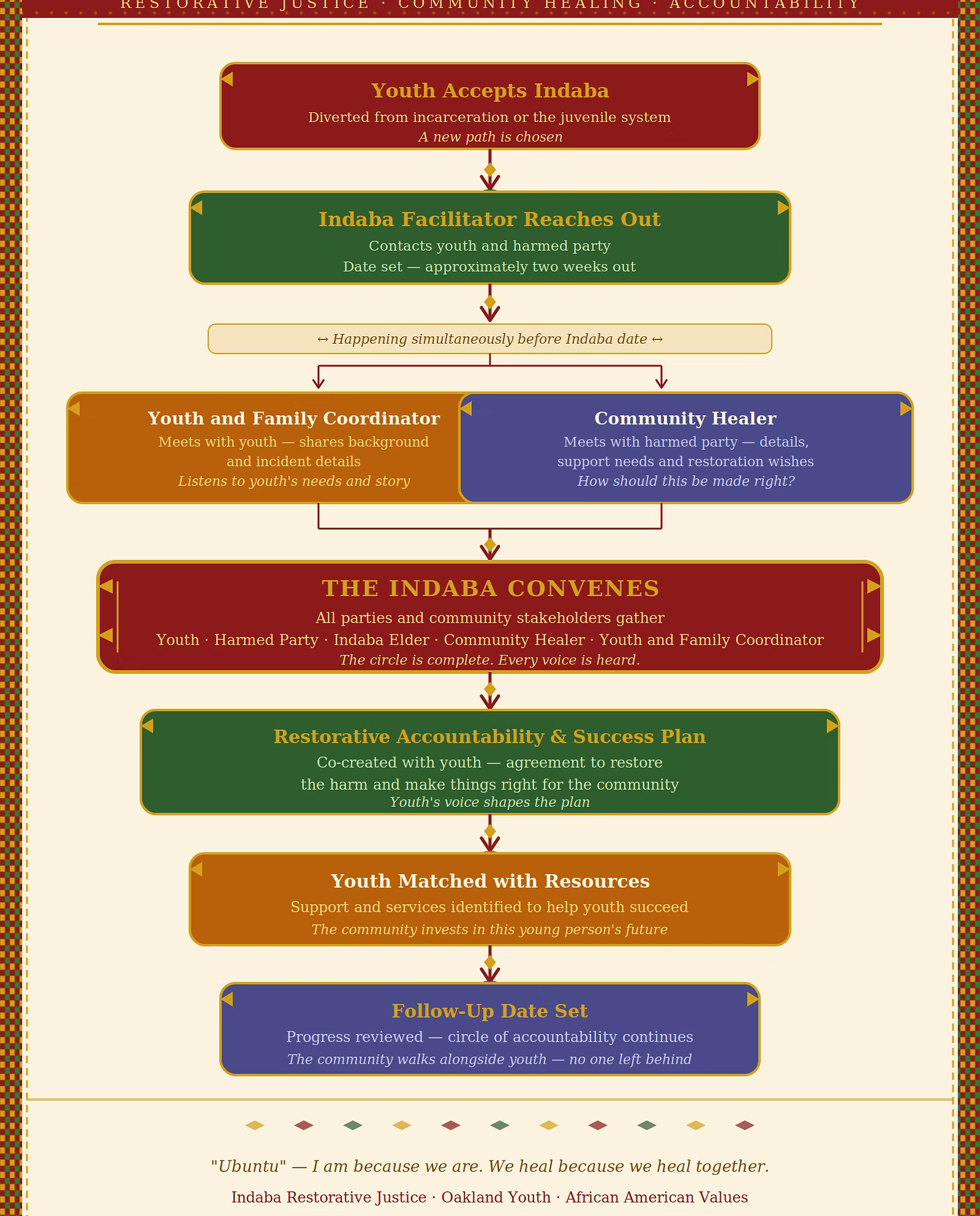
How the Process Works
Step 1 — Youth Accepts Indaba
When a young person accepts Indaba, they are diverted away from incarceration or the formal juvenile court system. This is a voluntary choice — a commitment to face the harm caused and work toward making things right. Choosing Indaba is choosing community over the system.
Step 2 — Indaba Facilitator Reaches Out
An Indaba facilitator contacts both the youth and the harmed party to introduce the process, answer questions, and set a date for the Indaba court — typically about two weeks out. This period is used to prepare everyone so they can show up fully.
Step 3 — Preparation on Both Sides (Happening at the Same Time)
Youth and Family Coordinator meets with the youth. Before the court date, a Youth and Family Coordinator reaches out to the young person to talk through what happened. They listen to the youth’s background, hear their side of the story, and identify what support and resources the youth may need to succeed. The youth’s voice matters here — this is not about building a case against them, but about understanding them.
Community Healer meets with the harmed party. At the same time, a Community Healer connects with the person or community that was harmed. They listen to what happened, what the harmed party needs, and how they would like to see the situation repaired. The harmed party’s voice is centered, not minimized.
Step 4 — The Indaba Court Convenes
All parties come together for the Indaba court. This is the heart of the process. The youth, the harmed party, facilitators, coordinators, community members, and other stakeholders are all present. The circle is complete, and every voice is heard. This is not a courtroom — it is a community gathering, guided by principles of honesty, respect, and healing.
Step 5 — Restorative Accountability and Success Plan (RASP)
Together, the circle creates a Restorative Accountability and Success Plan. The youth agrees to a set of actions to repair the harm they caused and to demonstrate accountability to their community. This plan is not handed down from a judge — it is co-created, with the youth’s input shaping what accountability looks like for them. The RASP reflects both repair of the harm and investment in the youth’s future.
Step 6 — Youth Matched with Resources
The youth is connected to the services and support they need to follow through on their plan and thrive. This may include mentorship, mental health services, educational support, job training, housing assistance, or other community resources. Indaba does not just hold youth accountable — it equips them.
Step 7 — Follow-Up Date Set
A follow-up date is established to review the youth’s progress. This ongoing circle of accountability ensures the youth is not left to navigate the plan alone. The community walks alongside them. No one is abandoned.
Get In Touch
Positive Communication Practices
1720 Broadway, 2nd Floor
Oakland, CA 94612
(510) 917-1505
info@positivepractices.net